 Qalyze
 Qunde
Qunde Qibes
QibesKassen-Dashboard: syncing a cash register to Shopify
For a cosmetics retailer I automated the stock sync between the in-store register and the online shop. The interesting part is less the feature list than what surfaced once it hit her real catalog and her real PC.
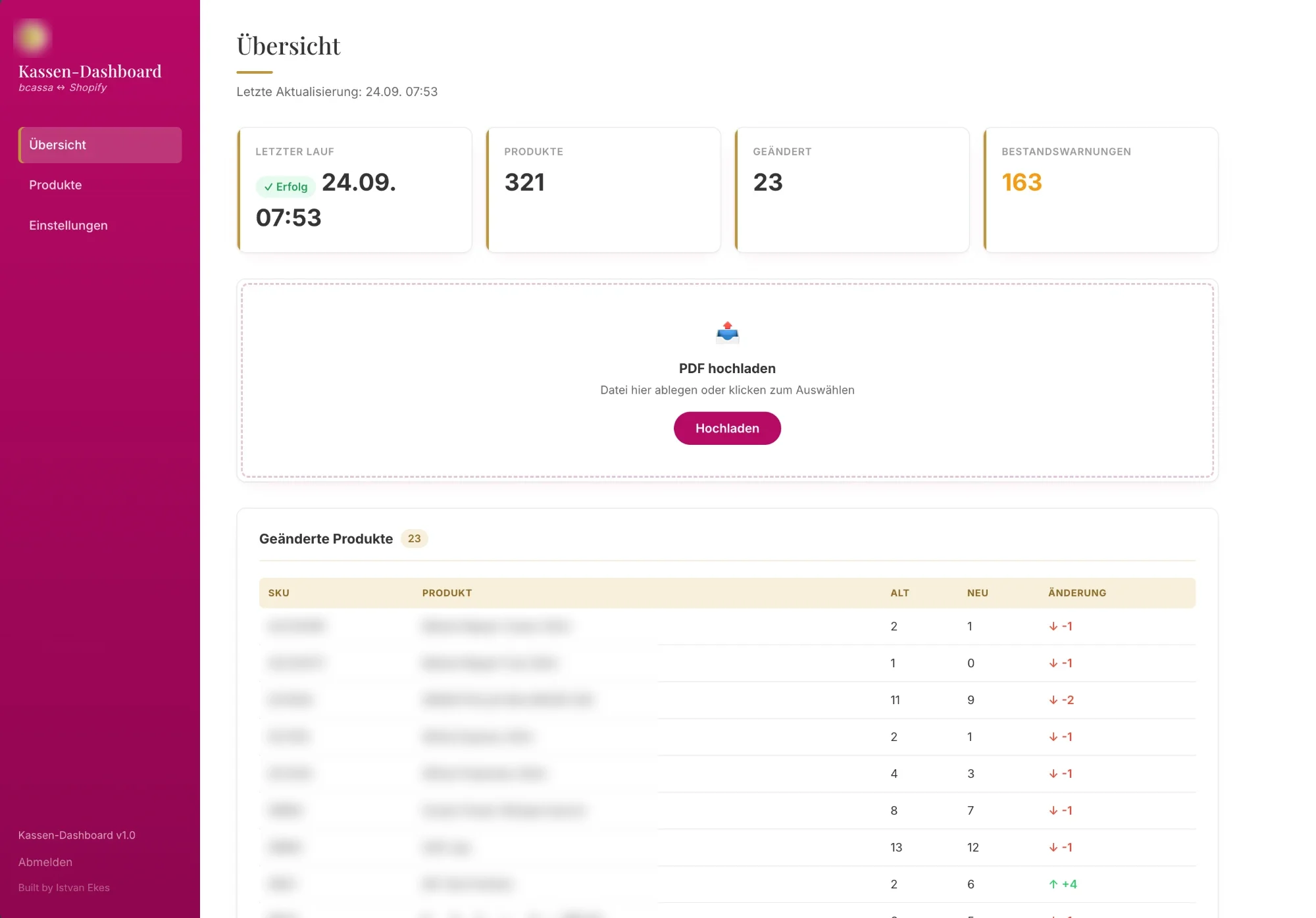
Two systems with no way of talking to each other
A cosmetics retailer ran bcassa, a German point-of-sale system used in-store, and Shopify as the online shop. Every in-store sale changed stock only inside bcassa. The owner's only way to reflect that on Shopify was to check a PDF inventory export and update products by hand.
Her existing tooling made it worse: a script that parsed that PDF by guessing which numbers were which, silently corrupting product names whenever a supplier name happened to contain digits.
What I built
An end-to-end sync system, plus a delivery mechanism built for a non-technical owner rather than a developer.
What actually broke
The differentiator of this project is not the feature list. It is what surfaced once it hit her real catalog and her real PC, and how each problem got run down.
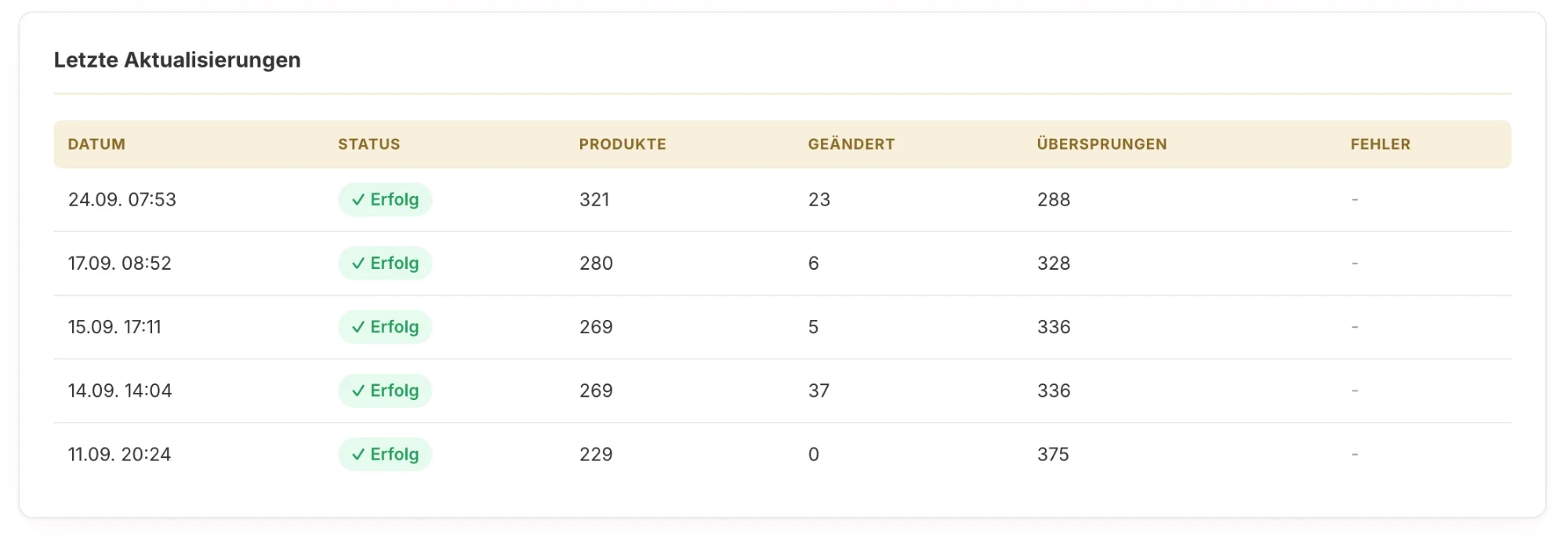
Stack
Where it landed
Running unattended in production: she drops a PDF in a folder, stock updates on Shopify within minutes, and every failure, not just the ones she happens to notice, emails the developer automatically.
The parts that looked simple at spec time turned out to be mostly about the parts that are not simple in practice: a proxy layer neither of us configured by hand, an API that changed its contract three times mid-build, and software that has to be trustworthy enough for someone who will never read a stack trace.
Two systems that do not talk to each other?
Tell me in a free 30-minute call where things are still copied over by hand.
A project by Qavlar.tech, built in Saarbrücken.